Pages

Showing posts with label ESOL10. Show all posts

Thursday, December 3, 2020

Hauora - The Chocolate Industry

In ESOL, we have been learning about the dark side of the chocolate industry. Today, we just finished working on a task that we have been working on since last week. This task was about putting the effects of unfair trade into the 4 types of wellbeing. 


Thursday, October 29, 2020

'Who Gets What' in the bean to chocolate bar chain

 In ESOL, we started learning about the Chocolate Industry. We were separated into 5 groups; Growers of cocoa, buyers of cocoa, producers of other ingredients, chocolate manufacturers, and shopkeepers/retailers. Our goal was to decide how much of the $1.23 each group should get. 

Growers of cocoa

Rojan, Daniel, Ace, Tristan, Sofia

The foundation. Harvest cocoa when it's in good condition to be harvested and sent to the buyers. 


Physical Labor -Planting, Farming, Harvesting and Packaging. 


Areas of work - Tropical land or acceptable climate conditions in a land - Africa and Euro 


What do you do:


Keep the plants Healthy- Depending on Rainfall the Cacao will need between 1-2 inches of water per week. Don't let it get soggy. 


Make sure the plants is healthy/ taking care 

Daily routine 

Take care of the area 


Out of the $1.23 dollar we Growers take 20% of it Which is 25 cents. Respectably, We think that us growers should atleast get that much of the total profit as we do the growing and harvesting to sell to the manufacturers and sellers. But vice versa without the manufacturers and sellers we would not be making much in return. 

Buyers of cocoa from the growers

Wajihah, Jhermaine, Myka

  • Importing to chocolate makers

  • Pay the producers

  • Working in a pretty cozy place

  • Normal office clothes/delivery clothes

  • Promote the materials

  • Sell to rich producing countries

  • Bring samples of the product

  • Test product

  • Work at least 42 hours a week

  • Look for farms where there are cocoas. 

Producers/growers of other chocolate ingredients

Ian 

Shawn

Brielle 

What does your job look like?

  • Farm, Collect, Sell, Repeat.          

What do you do?

  • Produces and imports other ingredients for the chocolate industries.

  • Physical labour is required producing ingredients such as sugar, milk, vegetables fats, etc.

  • Taking care of the ingredients if they are expired or check if there’s something wrong with them… 

  • 40 hours a week

Where do you work?

  • On a farm factory with a wide area to grow ingredients.


Produces:

  • Sugar

  • Milk 

  • Cocoa Butter

Chocolate manufacturers (Cadbury, Nestle etc.)

Matthew,Subby,Zapatista,Rusi  

What do you do? manufacturing processes differ slightly due to the different species of cocoa trees, but most factories use similar machines to break down the cocoa beans into cocoa butter 


What hours do you work? 40hours a week

Where do you work?area in usa , inside a factory  

Shopkeepers in NZ

Louise, Reige & Faith


Profit

Retail               

Dressed nicely

 The shop they sell them probably has good air conditioning.

Shopkeepers buy from manufacturers

Working conditions: depends, if you’re in a poor country selling it or in a rich country.

In rich countries or the producer countries.

Sells the product at convenience stores.

Depends on where the shop is. - Working hours -


Saturday, September 26, 2020

A Trip to the Antarctic Centre

On Friday 4th of September, the 10 ESOL class and I went on a class trip to the International Antarctic Centre as apart of the class Antarctic studies. We went there with Mrs Flores, Briggs and Handley by taxi van.

When we arrived there, we met a lady called Jane. She was one of the staff members and was in charge of our class. She then led us upstairs into the workshop room. We stayed there for about 40 minutes and we were also given a booklet to answer. One of the most important things I learned during her lesson was that huskies were removed in the 1990s because they were able to transfer diseases. Another significant thing I learned was the race between Amundsen and Scott. Roald Amundsen was from Norway and Robert Falcon Scoot was from the United Kingdom. Amundsen was the first one to reach South Pole. Unfortunately, in the end, Scott died.

After we finished the workshop, we went outside to see the Hagglund. It is also known as the Bandvagn 206. It can carry 14-17 people and can weigh 4333 kgs. They use it in Antarctica because of its ability to float on water. It is also able to cross crevasses and ice. Before we went inside, we were separated into two groups because we all couldn't fit in one vehicle. At first, I thought it was just going to be a normal ride but turns out it wasn't. It was really bumpy and wiggly as well. Going through the obstacles was probably the most fun part. We had to go up and down the hill and It almost feels like riding on a roller coaster. As we go through each different obstacles, everyone started laughing and shrieking. It was probably the funniest thing I've ever experienced. 

Next, we went to see the penguins. I haven't seen any penguins before in real life so I thought they were big as usual. However, as soon as I saw them, they were actually really small. They were called the Little Blue Penguins. The keeper told us that an average life span of a Little Blue Penguin is about 6 years. One of the oldest penguin there is 25 years old. Sadly, it died and we weren't able to see it. Currently, the oldest penguin that they have is 17 years old and it's well taken care of. We watched them intently as they swam around catching their food.

After seeing the Little Blue Penguins, we went to the cinema room to watch the 4D movie. The movie is called the Ice Voyage and it's about a journey in Antarctica. My friends and I sat on the front row and wore 4D glasses. With the help of the effects and the 4D glasses, It almost feels like I was there on Antarctica exploring through the place. One of my favourite scene during the movie is when we went under an icicle. I tried to touch it and realised that it was just a video. 

Then, we had some free time. Ms Briggs told us to meet in the storm room after we had lunch. My friends and I decided to roam around the places again. After a few minutes, we went back upstairs to get our bag and go to the cafe. I bought a bowl of fries and I shared it with my friends. With the time we have left, we thought we would never finish it because the fries were extremely hot. Thankfully, we finished it in time. 

Soon after, we went to the Storm Dome. We had to wait for a few minutes for the other people to arrive. Some of my classmates did the 'Cold Ice Challenge'. I was able to participate but Jane called us in after putting my hand in the ice for 1 minute. Before we went in, we were told to wear shoe covers so we wouldn't slip on the snow. When I went into the room, my body tingled as the breeze past through my knees. As time pass by, the room started to get dark. It was getting windy as well. When the storm began, most of the boys hid in the igloo to stay warm. My friends and I just stood outside and hid our hands in our pocket. Even so, it was still cold. I then decide to run around to heat my body up. Although, I didn't think it was a good idea because I nearly slipped on the snow.

Lastly, we went to the Antarctic Gallery. We saw a lot of posters and displays. I also saw a solar system that you can spin around. All of us  had to roamed around find interesting facts to put in our booklet. After a couple minutes, we left. We arrived back at school around 1:00 and we had to stay in the learning commons until lunchtime. Overall, I think the trip was too short for me since it was my first time there. I also felt sad because I really wanted to see the huskies there. It was also fun since I was able to spend my birthday with my classmates. 

Thursday, September 3, 2020

Dogs of the Vastness

 We have been studying Antarctica. We listened to a story about Nanook, a husky who was sent to Antarctica on an expedition in 1901. We then wrote the next chapter of the story from Nanook’s ‘Point of View’. 

Next Adventure
It’s another day again and I awoke this morning to the sound of Hector singing his dog’s song. However, today he looks different from usual. It looks like he was excited about something. I approach him and decided to ask him out of my curiosity. He said that we’re going to Antarctica in two days. I was really excited as I jump around happily. I snoop around to find the other dogs to tell them about the good news but as soon as I saw them I can already tell that they know. I can see them running and jumping around freely while Hercules was having a snooze. I wonder what Antarctica is like? Is it hot there? Or maybe cold? Is windy too? Questions keep popping out of my head as I get more curious. Do they have a beach where the others and I can run around? Can I find others like me there? I can’t really wait to go for another adventure but this time it will be more precious since I am able to go with my friends. 

Wednesday, April 1, 2020

The hottest and coldest places on earth - a comparative study

The Hottest and Coldest Place on the Earth
Around the world, there are many different climates. In fact, there are some places known for its extreme temperature. For instance, the Death Valley and the Vostok Station. Death Valley is known as the hottest place. Unlike, Vostok Station is known for the coldest place on Earth.

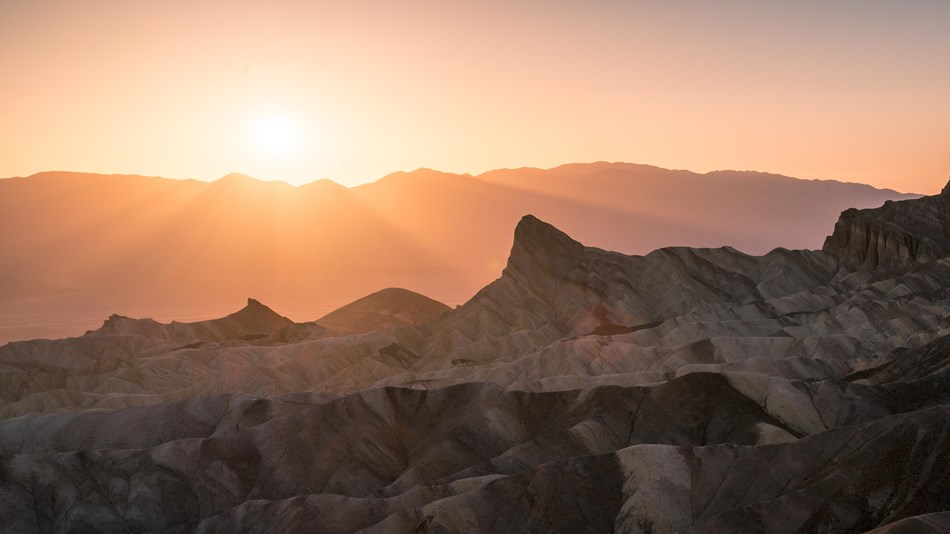
Death Valley is a large and complex park. To get the most out of your visit, you must plan well.Interestingly, Death Valley is the hottest place on Earth. Its located in Eastern California and its also the driest place in North America. It holds the worlds hottest temperature which is 56℃(134℉). This was recorded in Furnace Creek Ranch, Death Valley California on July 10, 1913. One of the reasons why death valley is so hot its because the sea level is 190ft below; the air gets warmer as the water gets lower. Death Valley is surrounded by sand and mountains. Because of this, many people visit there from time to time to enjoy its beautiful scenery. There are also various things that live in Death Valley such as animals and plants. Although, some people live here because of work.

â–· Vostok Station: The Russian Footprint in Antarctica | Russian ...Vostok Station is known as the coldest place on Earth, with the lowest record temperature at -89.2℃(-128.6℉), recorded on July 20, 1983. This place is a Russian research station found by the Soviet Union in 1957. Its located in inland Princess Elizabeth Land, Antarctica. The station was named after Vostok, which was the lead ship of the First Russian Antarctic Expedition. This place is not usually inhabited by humans. The people who travel or live in Antarctica are people who work on research stations and tourists. Surprisingly, there's a lake underneath the surface. Its called the 'Vostok Lake'. Researches are still searching if there are any species living under it. So it might be possible to be inhabited by animals. If you were to see the Vostok Station, you wouldn't see that much landscape. Instead, you would see the ground covered with endless thick ice sheets.

The climate in Death Valley and Vostok Station are very different from each other. However, they still have similarities and differences between them. The similarities that they have is having an extreme climate. Both of these places are also inhabited by animals. The differences between them are the climate and temperature.

Friday, February 7, 2020

A recent item that interests me

The Deadly Coronavirus

The coronavirus is a group of viruses that cause diseases in animals and humans. There are 4 known types in the group named Alphacoronavirus, Betacoronavirus, Gammacoronavirus, and Deltocoronavirus. The first two can only infect mammals such as bats, pigs and humans. Gammacoronavirus infects birds and poultries, while Deltocoronavirus infect both animals and humans. People that are infected by the virus are known to cause mild symptoms such as a runny nose, sore throat, cough and fever. This virus leads some people to more severe cases such as Middle East Respiratory Syndrome(MERS) and Severe Acute Respiratory Syndrome(RARS). According to the scientist, the Wuhan coronavirus is likely to become a pandemic.

The virus was first discovered in the 1960s. It was suspected to have originated from snakes and bats. Some people that are likely to become severely ill with the virus are older people and people with pre-existing medical conditions(such as heart disease and diabetes). As the infection became well known worldwide, it hooked me in a very uninterestingly way. I thought about how people endure this situation and how they cope with it.

Unfortunately, the coronavirus has negatively impacted China and other countries. This deadly infection has killed over 400 people. It has spread globally and over 20,000 people are infected. So far, Hong Kong and the Philippines have reported a death outside of China. The impact of the virus has not only affected people but also businesses and discrimination and racism against the Chinese people.

With the current event, it leaves people bothered and worried. The virus is easily transmitted to people by coughing and sneezing. Instead of panicking over this issue, we should protect ourself by it. You can do this by washing your hands every day and staying healthy and clean.